


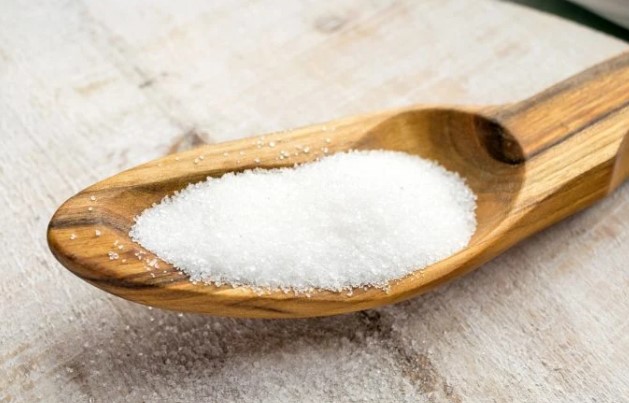
New research reveals that sorbitol, a common sugar alcohol used in “low-calorie” foods, can behave much like fructose once inside the body, potentially contributing to liver strain and metabolic dysfunction.
Sweeteners such as aspartame, found in Equal packets, sucralose (Splenda), and various sugar alcohols are often viewed as better choices than foods containing refined sugar (glucose).
However, new research is beginning to question that belief. Recent findings show that the sugar alcohol sorbitol may not be as harmless as many assumed.
A study published in Science Signaling adds to ongoing work from the laboratory of Gary Patti at Washington University in St. Louis, which has been investigating how fructose affects the liver and other parts of the body.
Patti, the Michael and Tana Powell Professor of Chemistry in Arts & Sciences and a professor of genetics and medicine at WashU Medicine, has previously shown that fructose processed in the liver can be used by cancer cells to fuel their growth. Earlier studies have also linked fructose to steatotic liver disease, a condition that affects about 30% of adults worldwide.
Sorbitol as a Stealth Source of Fructose
One of the most unexpected results from the new research is the discovery that sorbitol is “one transformation away from fructose,” which allows it to trigger similar biological responses, according to Patti.
Experiments in zebrafish revealed that sorbitol, which appears in “low-calorie” candies and gum and occurs naturally in stone fruits, can be produced by enzymes in the gut and later converted into fructose once it reaches the liver.
The research team found that the body can reach fructose through many different metabolic pathways. These routes can vary based on how much sorbitol and glucose a person consumes, as well as the specific mix of bacteria living in the gut.
For starters, although most of the research on sorbitol metabolism has focused on its production due to glucose overload in pathological settings such as diabetes, sorbitol can be naturally produced in the gut from glucose after eating, Patti said.
The enzyme that produces sorbitol has a low affinity for glucose, so glucose levels must be high for it to take effect. That is why sorbitol production has primarily been associated with diabetes, where blood glucose levels can become elevated. But, even in healthy settings, glucose levels in the gut become high enough after feeding to drive sorbitol production within the intestine, according to the team’s zebrafish experiments.
“It can be produced in the body at significant levels,” said Patti. “But if you have the right bacteria, turns out, it doesn’t matter.”
Sorbitol-degrading Aeromonas bacterial strains convert the sugar alcohol into a harmless bacterial byproduct.
“However, if you don’t have the right bacteria, that’s when it becomes problematic. Because in those conditions, sorbitol doesn’t get degraded and as a result, it is passed on to the liver,” he said.
When Sorbitol Overwhelms the System
Once in the liver, it is converted to a derivative of fructose. It’s important to determine if alternative sweeteners are providing a healthy alternative to table sugar since people with diabetes and other metabolic disorders may be relying on them as “sugar-free” products.
Gut bacteria do a good job of clearing sorbitol when it is present at modest levels, such as those found in fruit. But problems arise when sorbitol quantities become higher than what gut bacteria can degrade. This can occur when excessive amounts of glucose are consumed in the diet, which lead to high levels of glucose-derived sorbitol, or when dietary sorbitol itself is too high.
Dietary Complexity and Future Research
The more glucose and sorbitol consumed, the more likely it is that even if someone has the friendly bacteria that clear it, those gut microbes may be overwhelmed with the task.
Avoiding both sugar and alternative sweeteners is increasingly complicated, as many foods are packed with multiple varieties of all the above. Patti was bemused to discover his own favorite protein bar was chock full of sorbitol.
The lab will need to do more research to understand the specific mechanisms for how bacteria clear sorbitol, but the basic idea that these sugar alcohols, called polyols, are harmlessly expelled may not hold true.
We do absolutely see that sorbitol given to animals ends up in tissues all over the body,” he said.
Bottom line: it’s becoming more apparent that “there is no free lunch” when trying to find sugar alternatives, with many roads leading to liver dysfunction.


comments


Other categories
Recent Comments