


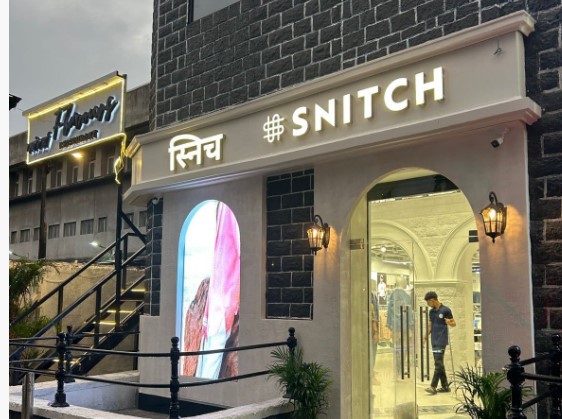
The next goal for the brand is to make Snitch feel instantly accessible, everywhere, not just through more stores, but through time
New Delhi: In fast fashion, speed isn’t a strategy—it’s survival. And while global giants like Zara and H&M took decades to stitch themselves into India’s wardrobes, a Bengaluru-born brand has done it in under three years. Snitch—the homegrown menswear label that’s racing towards its 100th physical store and quietly rewriting how fashion scales in India.
Founded in 2020 by Siddharth Dungarwal, with Chetan Siyal as co-founder, Snitch’s journey reads less like a traditional startup story and more like a real-time hustle—one shaped by crisis, instinct, and an almost obsessive focus on India’s Gen Z consumer.
"When we opened the first Jayanagar store, the ambition was clarity, not scale. We wanted to prove that an Indian men’s fashion brand could build genuine community, consistency, and experience offline, the same way we had online," said Chetan Siyal, Co Founder & Chief Marketing Officer, Snitch. "What’s surreal now is not just the number 100, but the speed at which conviction turned into momentum. Every store validated the next one. Standing on the edge of this century feels less like a finish line and more like a responsibility, to raise the bar for how fast, how thoughtfully, and how customer first a brand can grow in India." he added.
Since the brand’s early offline stages in 2023, IndiaRetailing has been at the forefront of covering its expansion, announcing major breakthroughs and launches as they happened.
A Pandemic Pivot That Changed Everything
Snitch didn’t begin with grand D2C dreams. It started as a B2B apparel manufacturer, supplying to other brands—until the pandemic wiped out wholesale orders overnight. Faced with empty order books and an uncertain future, Dungarwal and Siyal made a high-risk call in 2020: sell directly to consumers.
They spotted a gap many had ignored—Indian men wanted trend-led fashion that felt global but was priced and sized for them. Snitch went fully D2C, launching online with sharp designs, quick drops, and a brand voice that spoke the language of Instagram, not boardrooms.
The Shark Tank Moment That Lit the Fuse
The real inflexion point came in early 2023, under studio lights. On Shark Tank India Season 2, Siddharth Dungarwal delivered a pitch that didn’t just win funding—it made TV history. Snitch walked away with a rare “All-Shark Deal”, bringing Anupam Mittal, Aman Gupta, Namita Thapar, Vineeta Singh, and Peyush Bansal onto its cap table.
The Rs 1.5 crore cheque mattered—but the national endorsement mattered more. Overnight, Snitch transformed from a fast-growing D2C label into a name millions recognised.
|
Metric |
2020 (Launch) |
2025 (Current) |
|
Stores |
0 (Online Only) |
100 Stores |
|
Revenue |
~Rs 23 Crore (FY21) |
Rs 520 Crore+ (FY25) |
|
Cycle Time |
Standard Retail |
30-Day Design-to-Store |
|
Delivery |
3-5 Days |
60-Minute Instant Delivery |
From One Store to Almost 100—At Breakneck Speed
Most D2C brands treat offline retail cautiously. Snitch treated it like a sprint.
Its first flagship store opened in Jayanagar, Bengaluru, in July 2023. Less than two years later, the brand celebrated its 50th store in Kalyan Nagar. Now, it’s on the brink of opening store number 100, with a presence across 38+ cities—from Bengaluru and Mumbai to Surat, Pune, Hyderabad, and Delhi NCR.
"If I had to distill it into one thing, it would be deciding to build like a digital brand even while going offline. We didn’t treat stores as real estate projects; we treated them as performance assets. Every decision, from location selection and store size to inventory mix and staffing, was driven by data, speed, and iteration. We were okay launching fast, learning fast, and correcting faster," said Siyal. "Most brands wait for perfection before scaling. We chose momentum with discipline. That mindset made all the difference," he added.
Industry watchers call it one of the fastest offline expansions ever by an Indian D2C fashion brand.
Buying a Shirt in 60 Minutes? Snitch Made It Happen
In October 2025, Snitch pulled off its boldest move yet—60-minute fashion delivery.
Using its store network as hyperlocal fulfilment hubs, the brand launched quick commerce for apparel in Bengaluru. The idea was simple but radical: if food can arrive in minutes, why can’t fashion?
Powered by a proprietary omnichannel order management system, customers can now order a party shirt at 7 PM and wear it by 8. The result? A rare 50:50 revenue split between online and offline channels—a balance most D2C brands only talk about.
Funding, Speed, and the Rs 1,000 Crore Dream
To fuel this momentum, Snitch raised $40 million (Rs 340 crore) in Series B funding in May 2025, led by 360 ONE Asset, with IvyCap Ventures and SWC Global joining in. The capital is accelerating store expansion, tech infrastructure, and a supply chain built for speed.
Unlike traditional fashion cycles planned months ahead, Snitch runs on a 30-day design-to-rack model. Trends spotted via data and AI tools are designed in-house, manufactured entirely in India, and shipped to stores in weeks—not seasons.
What’s Next? 300 Stores and Beyond
As Snitch prepares to unlock its 100th store, the ambition is already bigger. The roadmap points to 300 stores by 2027 and a Rs 1,000 crore+ revenue target by FY26.
"In 2026, speed won’t be a differentiator; it’ll be an expectation. We’re chasing a future where fashion discovery, trial, and delivery collapse into one seamless experience, whether that’s 60 minutes, same day, or store to door in under an hour across key cities. At the same time, we want to prove that scale doesn’t have to dilute brand soul. Growing faster and staying human is the real impossible goal we’re chasing next." added Siyal.
For a brand born out of a lockdown crisis, Snitch’s story is a reminder that in modern retail, speed plus instinct can beat scale—and sometimes, rewriting the playbook is the only way forward.


comments


Other categories
Recent Comments