

The stated aim of Islamabad's actions was to press Washington for intervention and to "somehow stop" India's military campaign following the Pahalgam terror attack in Jammu and Kashmir.
Newly accessed US government filings reveal an extraordinary lobbying blitz by Pakistan in Washington, exposing the scale of diplomatic pressure Islamabad unleashed as it struggled to blunt India's military response during Operation Sindoor in May 2025.
Documents reviewed by NDTV show that Pakistani diplomats and defence officials sought more than 50 meetings with senior US administration figures, lawmakers and influential media outlets between the launch of Operation Sindoor and the full implementation of the ceasefire after a Pakistan-sponsored terror attack in Jammu and Kashmir's Pahalgam in April 2025.
'Over 60 Meetings'
The records, filed under the US Foreign Agents Registration Act (FARA), indicate that Pakistan's ambassador to the United States and its defence attaché reached out repeatedly by emails, phone calls and in-person meetings to more than 60 officials and intermediaries.
The stated aim was to press Washington for intervention and to “somehow stop” India's military campaign following the Pahalgam terror attack in Jammu and Kashmir.
What Was Discussed?
The outreach spanned Congress, the Pentagon, the State Department and prominent American journalists. Pakistani representatives discussed Kashmir, regional security, rare earth minerals, and broader bilateral ties, while also seeking interviews and background briefings with leading US media organisations.
Several entries describe the efforts as “ongoing representation of Pakistan”, underscoring the intensity and persistence of the campaign.
Pakistan's Lobbying Efforts
This lobbying surge did not emerge in isolation. In November 2025, The New York Times reported that Pakistan had signed contracts with six Washington lobbying firms worth roughly $5 million annually to gain expedited access to the Trump administration and secure favourable trade and diplomatic outcomes.
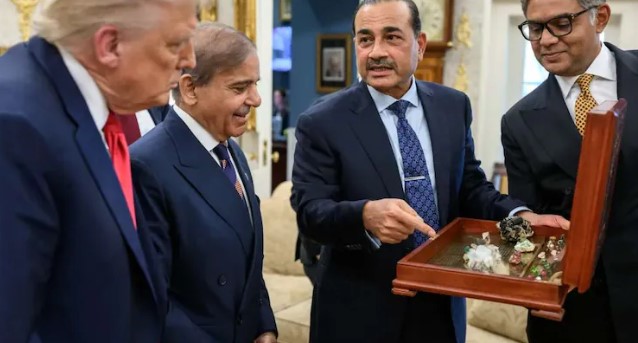
Weeks after Islamabad struck a deal with Seiden Law LLP working through Javelin Advisors, then-US President Donald Trump hosted Pakistan Army Chief Field Marshal Asim Munir at the White House, a meeting widely seen as symbolising Pakistan's renewed access to the highest levels of US power.
According to the New York Times' investigation, Pakistan dramatically ramped up its spending on lobbying in April and May, outlaying at least three times more than India during the same period.
The paper described the resulting policy shifts as a sharp turnaround from previously strained US–Pakistan relations, marked by public praise for President Trump, the nomination of his name for the Nobel Peace Prize, and the pursuit of lucrative business and trade concessions.
Multiple diplomatic sources said the 2025 FARA filings confirm a broader pattern: Pakistan expanded its lobbying footprint across Capitol Hill and the US media ecosystem, with some individual contracts and outreach efforts running into hundreds of thousands of dollars.
While there are indications that spending tapered later in the year, the documents collectively paint a picture of a state under intense military and diplomatic pressure, one that turned urgently to Washington in hopes of restraining India's battlefield momentum.


comments


Other categories
Recent Comments