


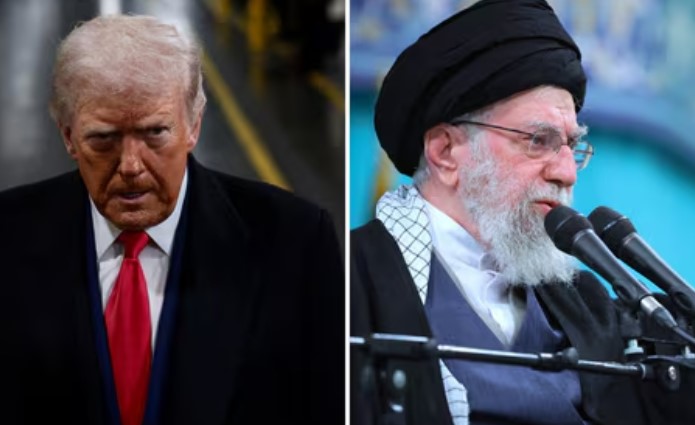
Washington has indicated it wants discussions to extend beyond Iran’s nuclear activities to include ballistic missiles, regional armed groups and human rights.
Iran and the United States head into high-stakes talks in Oman on Friday under mounting military and diplomatic pressure, with President Donald Trump warning of unspecified “bad things” if a deal is not reached even as Washington signals openness to diplomacy.
The talks come against the backdrop of a US naval buildup near Iran, described by Trump as a massive “armada”, and deep disagreements over the scope of negotiations, raising doubts over whether the discussions can avert further escalation in an already volatile Middle East.
Ahead of the negotiations, Iran’s foreign minister Seyed Abbas Araghchi stressed that any agreement must rest on equality and respect.
“Iran enters diplomacy with open eyes and a steady memory of the past year. We engage in good faith and stand firm on our rights. Commitments need to be honored. Equal standing, mutual respect and mutual interest are not rhetoric—they are a must and the pillars of a durable agreement,” Araghchi wrote in a post on X.
Hours before the talks, Iranian state TV said the long-range ballistic missile “Khorramshahr 4” had been deployed at an underground Revolutionary Guards missile complex, reported Reuters.
Here are 10 top developments on Iran-US tensions
- Iran and the United States are set to meet in Muscat for negotiations focused on Tehran’s nuclear programme, with both sides signalling readiness to revive diplomacy despite sharply diverging expectations over what the talks should cover.
- Washington has indicated it wants discussions to extend beyond Iran’s nuclear activities to include ballistic missiles, regional armed groups and human rights, as reported by Reuters, this may complicate the already thin prospects for progress at the talks.
- US Secretary of State Marco Rubio said on Wednesday that Washington wanted the negotiations to address Iran’s nuclear programme, its ballistic missiles, its support for armed groups across the region and its “treatment of their own people”.
- Iran has rejected a broader agenda, saying foreign minister Abbas Araghchi and US Middle East envoy Steve Witkoff should focus exclusively on nuclear issues during the Oman talks, reported Reuters.
- Tehran said it would participate in the negotiations “with authority and with the aim of reaching a fair, mutually acceptable and dignified understanding on the nuclear issue”. “We hope the American side will also participate in this process with responsibility, realism and seriousness,” foreign ministry spokesman Esmail Baghaei said on Thursday.
- Iranian leaders remain concerned that Trump could still order military action, as the US Navy builds up forces near Iran, a deployment the president has referred to as a massive “armada”. The naval buildup has followed a bloody government crackdown on nationwide protests in Iran last month, further heightening tensions between Washington and Tehran.
- White House press secretary Karoline Leavitt said Trump was assessing whether a deal was possible but underscored that military options remained firmly on the table.
- “While these negotiations are taking place, I would remind the Iranian regime that the president has many options at his disposal, aside from diplomacy as the commander in chief of the most powerful military in the history of the world,” Leavitt said.
- Trump has warned that “bad things” would probably happen if a deal could not be reached, intensifying pressure in a standoff marked by mutual threats of airstrikes. Iran has said it would respond harshly to any attack and warned neighbouring countries hosting US bases that they could be targeted if involved in a strike.
- Negotiators face Iran’s red line on missile talks, with Tehran ruling out discussions on its “defence capabilities, including missiles and their range”. Iran deploys ballistic missile At the same time, Iranian officials told Reuters last week that Tehran could show “flexibility on uranium enrichment, including handing over 400 kg of highly enriched uranium (HEU) and accepting zero enrichment under a consortium arrangement as a solution”, while insisting its right to enrich uranium is not negotiable.


comments


Other categories
Recent Comments