


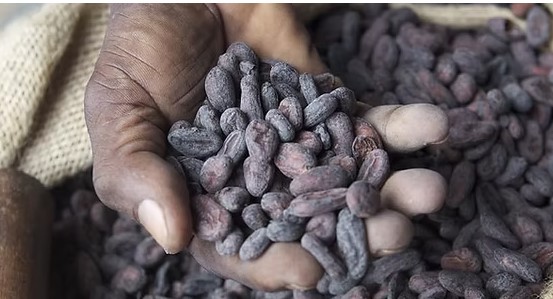
According to a report by Reuters, cocoa beans from the Ivory Coast’s main harvest are piling up in warehouses as exporters refuse to pay the government’s fixed farmgate price, creating a supply bottleneck that could reverberate through global chocolate and confectionery markets.
Cooperatives in the western part of the country say buyers are unwilling to pay the 2,800 CFA francs ($5.09) per kg farmgate price set at the start of the 2025/26 season by the country’s regulator, the Coffee and Cocoa Council.
Exporters argue that a slump in global cocoa prices to their lowest level in more than two years has rendered Ivorian beans uncompetitive.
The standoff has left unsold stocks stacked in warehouses in towns such as Duekoue, tightening cash flow across the supply chain in the world’s largest cocoa-producing nation.
For multinational food and beverage manufacturers – from global chocolate groups to ingredient suppliers – the impasse underscores the structural fragility of cocoa sourcing at a time when price volatility and ESG scrutiny remain high.
Price mismatch stalls trade
The government’s fixed farmgate pricing mechanism is designed to shield farmers from sharp swings in the market. But when global futures prices fall below the level at which exporters can profitably purchase beans at the official rate, physical buying can stall.
That is now playing out across parts of the Ivory Coast.
Cooperative managers say they are unable to sell inventory to exporters at the mandated price, leaving them unable to pay farmers in full.
Some farmers report being offered between 1,500 and 1,800 CFA francs per kg – well below the official rate and in breach of regulations – as cash-strapped buyers attempt to secure supply at market-clearing levels.
The regulator has intervened, launching a programme in January to purchase 100,000 metric tons of beans that had remained unsold for weeks. It accelerated purchases earlier this month amid concerns that beans stored in poor conditions could deteriorate ahead of the April-to-September mid-crop.
For global processors and manufacturers, the regulator’s intervention may prevent immediate quality losses but highlights deeper tensions in the Ivorian pricing model.
Implications for chocolate and ingredient buyers
Ivory Coast accounts for roughly 40% of global cocoa output. Any sustained disruption to bean flows from the main crop has implications for grinders, traders and major branded manufacturers reliant on forward contracts and predictable physical shipments.
While headline futures prices have fallen on weaker demand, physical tightness at origin can still disrupt supply chains. If exporters continue to resist purchases at the official farmgate price, shipments could slow, leading to logistical backlogs and potential short-term supply mismatches for processors.
There is also a quality risk. Prolonged storage in suboptimal conditions can reduce bean quality, affecting grind yields and flavour profiles – an issue for premium chocolate makers and industrial users alike.
For manufacturers already navigating high input cost volatility over the past two years, the current situation adds another layer of complexity.
A widening gap between local fixed prices and global market levels could increase the risk premium associated with sourcing from the Ivory Coast, particularly if regulatory interventions distort normal trade flows.
Farmer resilience under strain
At the farm level, the cash squeeze is acute. With unsold beans accumulating ahead of the mid-crop, some growers say they are accepting lower, unofficial prices to maintain liquidity.
For brand owners with sustainability commitments and traceability programmes in West Africa, the episode raises fresh concerns about income stability. Fixed farmgate pricing is intended to underpin farmer livelihoods; when enforcement falters or market dynamics undermine the system, those protections can erode quickly.
The situation also comes at a time when major chocolate manufacturers have been under pressure from investors and consumers to demonstrate resilience in their cocoa supply chains, particularly in relation to living income initiatives and deforestation-linked sourcing.
Structural tension in a volatile market
The current impasse illustrates the structural tension between government-managed pricing systems and globally traded commodity markets.
When global demand softens and prices fall, exporters’ margins compress. When prices rise sharply, manufacturers face cost inflation and may reduce purchasing. In both scenarios, volatility at the futures level can translate into disruption at the origin.
For the food and beverage industry, the key question is whether the regulator’s intervention remains temporary or signals deeper adjustments to the Ivory Coast’s marketing system.
If unsold stocks continue to build or quality deteriorates, grinders and chocolate manufacturers may face tighter availability in the coming months, even as global benchmark prices suggest relative calm.
In a market already shaped by weather risk, regulatory change and sustainability pressures, the latest bottleneck in the Ivory Coast is a reminder that cocoa’s supply chain remains highly exposed to policy and pricing mismatches at origin – with consequences that extend far beyond West Africa.


comments


Other categories
Recent Comments