


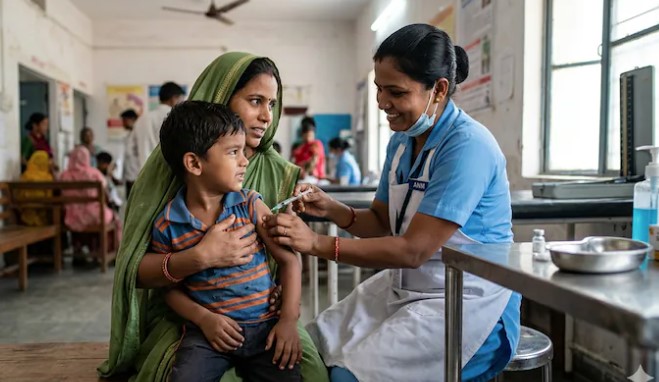
The World Health Organization's Big Catch-Up initiative has delivered over 100 million vaccine doses to children worldwide, targeting those missed during the COVID-19 pandemic and helping restore global immunisation coverage.
The World Health Organization (WHO), along with global partners, has announced a major milestone in its flagship immunisation recovery drive, The Big Catch-Up, which has delivered more than 100 million vaccine doses to children worldwide. Launched in 2023 during World Immunisation Week, the initiative was designed to address a sharp decline in routine childhood vaccinations caused by disruptions during the COVID-19 pandemic.
The pandemic severely impacted healthcare systems globally, leading to missed vaccinations for millions of children. According to WHO and partners, over 25 million children missed at least one routine vaccine dose in 2021 alone, increasing the risk of outbreaks of preventable diseases such as measles, polio and diphtheria.
To reverse this alarming trend, WHO, UNICEF and Gavi, the Vaccine Alliance joined forces with governments and health agencies to identify and vaccinate children who had been missed. Now, with more than 100 million doses administered across 36 countries, the initiative is being described as the largest catch-up immunisation effort in history.
What Is The Big Catch-Up Initiative?
The Big Catch-Up is a global immunisation recovery programme aimed at restoring vaccination coverage to pre-pandemic levels and beyond. It focuses particularly on "zero-dose" children, those who have never received even a single vaccine.
- Between 2023 and early 2026, the initiative reached an estimated 18.3 million children aged one to five years across 36 countries, delivering over 100 million vaccine doses.
- A key achievement has been reaching approximately 12.3 million zero-dose children, alongside millions more who had missed critical vaccines such as measles.
- This effort not only helps protect individual children but also strengthens herd immunity, reducing the risk of outbreaks in vulnerable communities.
Why Was This Initiative Needed?
The COVID-19 pandemic triggered one of the largest backslides in routine immunisation in decades. Healthcare disruptions, lockdowns, supply chain interruptions and vaccine hesitancy all contributed to declining coverage.
As a result:
- Over 100 countries experienced declines in immunisation rates
- Millions of children remained unprotected against life-threatening diseases
- Outbreaks of measles and other vaccine-preventable diseases surged globally
Experts warn that such gaps in immunisation can have long-term consequences, including increased child mortality and strain on healthcare systems.
How The Programme Worked
The Big Catch-Up initiative adopted a multi-pronged strategy:
- Identifying missed children: Countries used data-driven approaches to locate unvaccinated or under-vaccinated children, especially in underserved and conflict-affected regions.
- Strengthening routine immunisation systems: Healthcare workers were trained to integrate catch-up vaccinations into regular health services, ensuring sustainability beyond the campaign.
- Community engagement: Governments and civil society organisations worked to build trust, counter misinformation and encourage vaccine uptake.
- Expanding age coverage: Unlike traditional immunisation programmes that focus on infants, this initiative targeted children aged 1-5 years who had missed earlier vaccines.
Impact On Global Health
Vaccination remains one of the most effective public health interventions. According to global health estimates, vaccines save millions of lives every year and prevent severe complications such as disability and paralysis.
The Big Catch-Up has contributed to:
- Closing immunity gaps created during the pandemic
- Preventing outbreaks of diseases like measles and polio
- Strengthening healthcare systems in low- and middle-income countries
Notably, the initiative also delivered millions of doses of inactivated polio vaccine and measles vaccines, both critical for global disease control efforts.
Challenges And The Road Ahead
Despite its success, global health agencies caution that challenges remain. Millions of children still miss routine immunisations each year, particularly in fragile and conflict-affected regions.
Experts emphasise that catch-up campaigns are not a substitute for strong routine immunisation systems. Sustained investment, better healthcare access and community engagement are essential to ensure long-term protection. Additionally, declining global health funding and vaccine hesitancy pose ongoing risks to maintaining progress.
The WHO-led Big Catch-Up initiative marks a historic step in restoring global childhood immunisation after the disruptions of the COVID-19 pandemic. By delivering over 100 million vaccine doses and reaching millions of previously unvaccinated children, the programme has helped close critical immunity gaps and prevent potential outbreaks.
However, the work is far from over. Ensuring that every child receives timely vaccinations will require sustained global commitment, stronger health systems and continued public trust in vaccines. As health experts stress, routine immunisation, not emergency catch-up drives, remains the most effective way to safeguard future generations.


comments


Other categories
Recent Comments