


Developments over the weekend around the Strait of Hormuz pointed to serious differences within Iran over how much ground to give in negotiations.New Delhi:
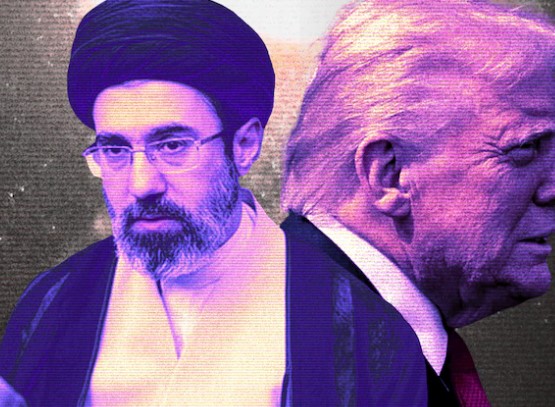
US President Donald Trump has claimed that Iran is struggling to determine who is in charge of the country, prompting a swift response from Iran's leadership, which rejected his remarks and insisted there is unity across the state and its institutions.
Trump's comments came amid ongoing tensions in the Middle East and weeks after the war involving Iran, the US and Israel, while Iranian officials pushed back his claims of division and internal power struggles.
'Iran Having Hard Time'
In a post on Truth Social, Trump said Iran was unable to identify its leader and was facing internal infighting between rival factions.
Trump also repeated his claim that the United States has full control over the Strait of Hormuz, a vital global shipping route for oil and liquefied natural gas, and said the blockade would not be lifted until Iran agrees to a deal.He wrote, "Iran is having a very hard time figuring out who their leader is! They just don't know! The infighting is between the 'Hardliners,' who have been losing BADLY on the battlefield, and the 'Moderates,' who are not very moderate at all (but gaining respect!), is CRAZY! We have total control over the Strait of Hormuz. No ship can enter or leave without the approval of the United States Navy. It is 'Sealed up Tight,' until such time as Iran is able to make a DEAL!!!"
'One Leader, One Nation, One Path'
Iran's leadership responded by rejecting Trump's claims and emphasising unity across all branches of government. The heads of Iran's executive, legislative and judicial branches issued a joint message stating, "In Iran, there are no extremists or moderates; we are all Iranians and revolutionaries."
Iran Ambassador Mohammad Fathali said, "One God, one leader, one nation, and one path-the path to the triumph of our dearly beloved Iran."
Parliament Speaker Mohammad Bagher Ghalibaf also responded on X, stressing that there are no "radicals or moderates" in Iran.
He wrote, "In Iran, there are no radicals or moderates; we are all 'Iranian' and 'revolutionary,' and with the iron unity of the nation and government, with complete obedience to the Supreme Leader of the Revolution, we will make the aggressor criminal regret his actions. One God, one leader, one nation, and one path; that path being the path to victory for Iran, dearer than life."
Iran's Foreign Minister Seyed Abbas Araghchi rejected claims of divisions within the country, saying Iran remains united across both military and diplomatic fronts.
"The failure of Israel's terrorist killings is reflected in how Iran's state institutions continue to act with unity, purpose, and discipline. The battlefield and diplomacy are fully coordinated fronts in the same war. Iranians are all united, more than ever before," Araghchi said.
Leadership Upheaval After Killings
Iran's leadership has undergone major upheaval since US and Israeli forces began striking the Islamic republic on February 28.
Supreme Leader Ali Khamenei and Revolutionary Guards chief Mohammad Pakpour were killed on the first day of the conflict, while senior security official Ali Larijani was killed in March.
Despite the deaths of several senior figures, their successors have so far remained largely out of public view.
Ali Khamenei's son and successor, Mojtaba Khamenei, has not appeared publicly since being named. The new Revolutionary Guards chief Ahmad Vahidi and new security chief Mohammad Bagher Zolghadr have also limited their public presence.
Follow LIVE Updates
Some senior figures who survived the war and retained their positions have continued to play a visible role in shaping Iran's public stance. These include Parliament Speaker Mohammad Bagher Ghalibaf, Foreign Minister Abbas Araghchi and President Masoud Pezeshkifan. All three have broadly backed a unified policy focused on pursuing diplomacy with the United States to end the war, while avoiding concessions.
Hormuz Decisions Reflect Divisions
Developments over the weekend around the Strait of Hormuz pointed to serious differences within Iran over how much ground to give in negotiations. Engagement with Washington has long been a source of tension among Iran's top leadership, even as there is a shared deep mistrust of the United States.
Last week, Araghchi said in a post on X that Iran was reopening the strait to commercial shipping as part of the ceasefire agreement with the US. Just hours later, Trump said the United States would keep its blockade in place to maintain pressure on Iran to reach a deal over its nuclear programme.
By Saturday morning, Iran's military announced it was closing the strait again, describing the move as retaliation for the continued blockade.
The events sparked criticism in some Iranian media, with voices questioning Araghchi's move and suggesting his post gave the impression Iran was showing weakness. This, they said, exposed differing views within the leadership. Tasnim news agency, which is seen as close to the Revolutionary Guards, reported that any position on the strait should have been announced by the National Security Council itself.
Araghchi's office dismissed the criticism, saying the Foreign Ministry "does not take any action without coordinating with higher-level institutions."
In an interview on Sunday, Ghalibaf sought to play down any signs of disagreement, stressing that the leadership was united on Iran's strategy in talks with the United States.
Arash Azizi, an Iranian journalist and columnist at The Atlantic, said the 64-year-old Ghalibaf is well placed to bridge gaps between Iran's rival factions, having written extensively about both the veteran politician and the Revolutionary Guards.
Qalibaf is a former general in the Guard and national police chief and kept close to the Guard throughout his long political career. At the same time, Qalibaf is close to the Khamenei family, both hailing from the area of the eastern shrine city of Mashhad, said Mohsen Sazegara, one of the founders of the Revolutionary Guard in the 1980s who is now an opposition figure living in the US.


comments


Other categories
Recent Comments