


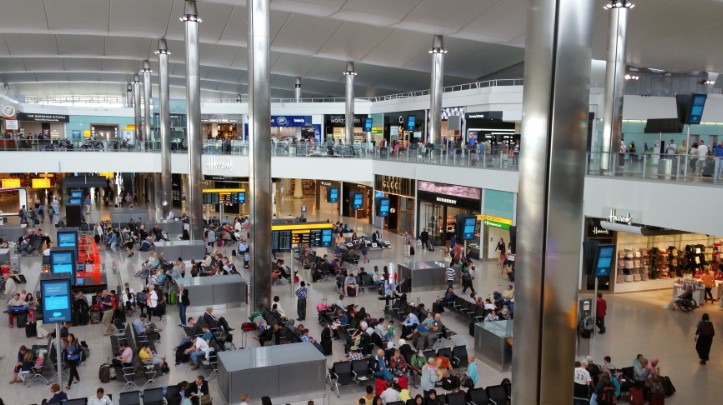
International tourists account for an estimated 35% to 45% of total airport retail spending, making them the most influential consumer segment in travel retail, according to insights from India Retails and Hospitality Private Limited (IRHPL).
The report highlights that the contribution of international travellers extends beyond footfall, driven by higher basket values and a stronger inclination toward duty-free and premium categories. This results in a disproportionate impact on overall retail value within airports.
IRHPL segments airport consumers into four key groups. International tourists contribute 35–45% of retail spending, followed by business travellers at 20–30%, families at 15–25%, and solo leisure travellers at 10–15%. Each segment demonstrates distinct purchasing behaviour, with international travellers leading demand for duty-free and luxury products, while business travellers focus on convenience-led categories such as food and beverage, lounges, and essentials.
Category-level insights indicate that perfumes and cosmetics are the largest contributors to duty-free revenue, accounting for approximately 30–35%, followed by alcohol and spirits at 20–30%. Fashion and luxury accessories contribute 10–20%, while electronics and confectionery or souvenirs each account for 5–10%. Food and beverage also represents a significant and growing category within airport retail.
Within food and beverage, demand is primarily driven by convenience formats. Grab-and-go options account for an estimated 50–65% of spend, compared to 25–35% for dine-in formats and 10–15% for premium beverages such as specialty coffee and bars.
The report also indicates that airport retail is not solely driven by luxury purchases. Luxury goods contribute approximately 20–35% of spending, while essentials account for 25–35%, and gifting categories such as chocolates and souvenirs contribute 20–30%.
In terms of purchasing behaviour, IRHPL estimates that 65–75% of airport retail purchases are pre-planned, with impulse purchases accounting for 25–35%. Common impulse categories include confectionery, small gifts, perfumes, cosmetics, and spirits.
“Airport retail is not a footfall game anymore, it is a passenger-mix game. International travellers bring higher intent, higher basket value, and stronger premium conversion. The real opportunity for airports and operators is to design retail and F&B ecosystems around how these passengers actually spend, not around how many people walk past a storefront,” said Naresh Sharma, CEO, IRHPL Group of Companies.
Sales patterns also vary across the week, with weekends typically driven by leisure travellers and higher spending on food and gifting, while weekdays skew toward business travel, with higher spend on convenience categories. Duty-free penetration among international travellers is estimated at 30–60%, with 40–50% considered a typical benchmark for major international hubs.
Looking ahead, IRHPL expects airport retail and travel to grow at 15–20% over the next two to three years, supported by expansion across metro airports and increasing passenger traffic. Overall airport retail spending is projected to grow at a mid-single to low double-digit rate, approximately 6–12% year-on-year.
The findings underscore the importance of passenger mix in shaping airport retail performance, with international travellers continuing to drive a significant share of value across categories.


comments


Other categories
Recent Comments