


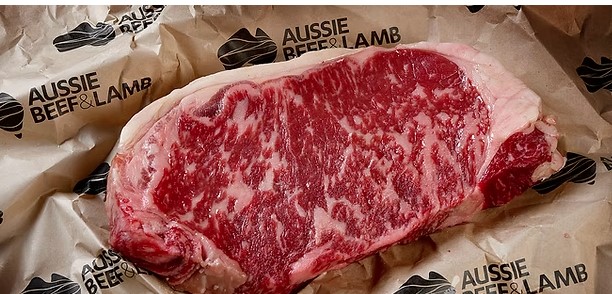
For more than 150 years, Australia has supplied beef and lamb to the UK, but recent trade developments are reshaping that relationship. With the implementation of the Australia–UK Free Trade Agreement and evolving global supply dynamics, Australian red meat is increasingly viewed not simply as an alternative to domestic supply, but as a strategic complement. Richard Sanders, of Aussie Beef & Lamb, explores how imports support the UK’s carcase balance, help address structural supply gaps and offer foodservice operators greater certainty and consistency in a complex sourcing landscape.
A historic partnership entering a new phase
Australia and the UK share a long agricultural trading history. For more than 150 years, Australian beef and lamb have been part of the UK’s food supply, supporting retailers, manufacturers and foodservice operators alike.
That relationship entered a new phase following the implementation of the Australia–UK Free Trade Agreement (FTA) in May 2023. Nearly three years on, the agreement has significantly improved market access, introducing expanded duty-free quotas and establishing a pathway toward tariff-free trade over time. The practical effect is clear: Australia has moved from being a constrained, quota-limited supplier to a more scalable and reliable partner for UK buyers.
For UK food and beverage manufacturers and foodservice operators, the implications are considerable. As global supply chains evolve and domestic production faces ongoing pressures, trade partnerships that support reliability and flexibility are becoming increasingly important.
Demand for red meat in the UK remains stable. Beef and veal consumption is expected to reach around 1.1 million tonnes carcase weight equivalent in 2026, while sheep meat consumption is forecast at approximately 275,000 tonnes and expected to remain broadly stable through to 2030.
At the same time, the domestic sector faces supply challenges. AHDB reported that in 2024, the UK fell short of self-sufficiency on beef by 20%. In this context, imports are an integral component of the UK’s food system.
Imports as part of the UK’s carcase balance
The UK has long operated within a global trading system that balances supply and demand across the whole carcase.
Approximately 16% of UK beef and veal production is exported from the UK, while around 31% of domestic sheep meat production is exported. This reflects the reality that different markets value different cuts and products, allowing processors to maximise value across the animal.
Trade flows, therefore, work in both directions. The UK typically imports roasting and steak cuts, forequarter and hindquarter products, veal and trimmings, while exporting other cuts, carcases and offal depending on market demand.
Overall, imports represent a significant part of the UK’s food supply. In total, the country imports 311,666 tonnes of red meat worth £2.2bn, while exporting 198,213 tonnes valued at £1.4 billion. These two-way trade flows deliver several benefits. They expand consumer choice, ensure a stable food supply and allow processors and manufacturers to optimise whole carcase utilisation across different markets.
Within this diversified supply mix, Australia currently represents around 6% of total UK beef imports, alongside suppliers such as Ireland, Poland, New Zealand and others.
The key point is that imports are not competing with domestic production in a simple equation. Instead, they are part of the mechanism that enables the entire system to function efficiently.
Addressing seasonal supply gaps
Seasonality is another area where global sourcing plays a vital role.
In the UK, lamb consumption peaks in April and May, driven by Easter and spring occasion dining. Retail performance during major seasonal events such as Easter and Christmas can more than double compared with an average two-week period.
However, the UK lamb production cycle does not align with this demand. Most British lambs are born in spring and typically reach market weight later in the summer and autumn.
This creates a supply mismatch for domestic produce, whereby peak demand in the UK is April - May, but peak domestic supply falls in summer and autumn.
Australian lamb can play an important role in bridging that gap. Thanks to the contrasting seasonality of the two countries, Australian lamb is available precisely when the UK supply is limited. This helps retailers and foodservice operators maintain availability, avoid volatile pricing and meet consumer expectations during key trading periods.
Rather than replacing domestic product, imported lamb allows a year-round offering. For manufacturers and foodservice businesses planning menus and supply chains months in advance, continuity such as this is critical.
Reliability for foodservice and manufacturing
Consistency and reliability are central requirements for professional buyers. Foodservice operators, in particular, require products that meet tight specifications and can be supplied at scale within short lead times.
Australian beef and lamb are well-suited to this environment because of the country’s highly developed export systems and integrated supply chains. Australia supplies red meat to more than 100 countries globally, operating under a wide range of regulatory and customer specifications.
The industry also benefits from strong traceability and integrity systems. Programmes such as the National Livestock Identification System (NLIS) underpin food safety, animal welfare and traceability across the supply chain. This gives UK buyers confidence around product quality, specification consistency and supply security.
This reliability is reflected in the recent growth in exports following the FTA. Australian beef and sheep meat shipments to the UK have increased steadily over the past three years from a relatively low base as improved market access allows supply chains to respond to demand.
This enables a broader product offering that spans grass-fed beef, grain-fed beef, Wagyu and a wide range of lamb cuts. The end result is more access to new, premium products and more choice for consumers and food service professionals alike.
From if to where on the menu
Perhaps the most significant change underway in the UK market is a shift in mindset. Historically, the question for many buyers was whether the Australian product would be used, but increasingly, the conversation has moved beyond that point.
Instead, the focus is on where Australian beef and lamb fit best within menus and product portfolios.
For some operators, that may be premium steak programmes built around high-quality grain-fed beef and Wagyu, given Australia’s standing as one of the leading producers and exporters of full and cross-bred Wagyu. For others, it may involve secondary cuts that offer strong yield and versatility in a challenging trading environment. Lamb, meanwhile, provides a reliable option during seasonal supply gaps and helps maintain continuity.
In an environment where food businesses must balance cost pressures with consumer expectations for quality and consistency, flexibility in sourcing is a strategic advantage.
Supporting the industry on the ground
While trade agreements and supply chains shape the framework of the market, practical engagement with chefs, buyers and manufacturers remains equally important.
The goal is straightforward: to help food professionals unlock the full value of Australian red meat while building stronger, more profitable businesses. As the market evolves and global supply dynamics continue to shift, collaboration will become increasingly important. For foodservice operators and manufacturers navigating today’s complex sourcing landscape, Australian beef and lamb are part of a broader strategy to deliver consistency, flexibility and quality to the end consumer.
Increasingly, the conversation is shifting to where they create the most value, rather than whether they belong on the menu.


comments


Other categories
Recent Comments