


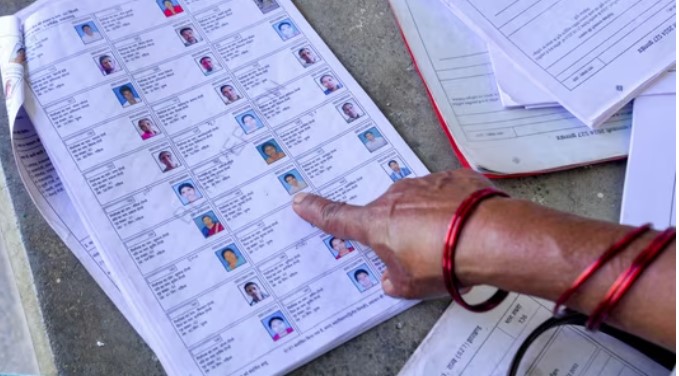
The Supreme Court said on Wednesday that the Special Intensive Revision (SIR) exercise of ECI has a direct nexus with free and fair election.
The Supreme Court on Wednesday ruled that Election Commission of India (ECI) had the authority to conduct the Special Intensive Revision (SIR) exercise and did not transgress any statutory or constitutional provision. The top court was delivering its judgement on a batch of petitions challenging the SIR of electoral rolls in Bihar.
The Supreme Court also upheld the power of the ECI to scrutinise citizenship during the SIR while clarifying that a refusal by the poll to include names won’t mean stripping people off their citizenship.
Any deletion on this ground will be subject to further adjudication, the apex court said and also directed the ECI to send people, whose names were deleted on the ground of not being able to prove citizenship, to competent authority for suitable adjudication.
SIR has a direct nexus with free and fair election, said the Supreme Court, noting that the ECI has power to conduct revision of electoral rolls under constitutional scheme and Representation of the People Act.
What is SIR
SIR is an electoral roll cleansing drive that the EC started with Bihar in June last year, citing concerns about bogus, duplicate, and ineligible voters – including deceased individuals and “illegal immigrants”.The SIR, launched to remove these entries and ensure the list is accurate and updated, sparked criticism from the Opposition, which alleged that the exercise is a strategic voter roll clean-up drive by the poll body to benefit the BJP.
The Supreme Court also affirmed on Wednesday the procedure adopted by the ECI during the SIR exercise, adding the revision was founded on a legitimate and constitutional purpose and adopted a fair process.
“Having regard to the nature of the problem sought to be addressed, the scale of the exercise undertaken and the procedural safeguards incorporated during its implementation, the measures adopted by the Commission cannot be said to be disproportionate to the objective sought to be achieved,” the Supreme Court said.


comments


Other categories
Recent Comments