


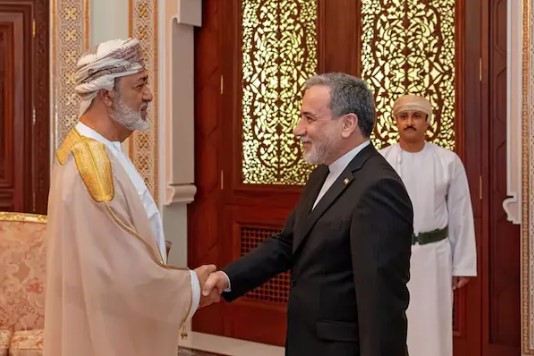
The Trump administration's distrust of Muscat reportedly started a day before the first US-Israeli airstrikes when Oman's foreign minister claimed an agreement between Washington and Tehran on nuclear issues was "within our reach".Muscut:
Oman has been thrust back into an unwanted diplomatic spotlight amid a stalemate between the United States and Iran over the conflict in the Middle East. Last week, US President Donald Trump warned Muscut, which has maintained neutrality throughout the over three months of war, to "behave" or face the wrath of American forces.
"It's international waters, and Oman will behave just like everybody else or we'll have to blow them up. They understand that; they'll be fine," Trump said after a US intelligence assessment concluded that Muscat was planning to join Iran in tolling vessels in the strategic Strait of Hormuz.
US Treasury Secretary Scott Bessent has also threatened the sultanate with sanctions if it charges ships for passage through Hormuz. Bessent later told the media that Oman's ambassador to Washington, Talal Alrahbi, had assured him that the Gulf state has "no plans for tolling".
On its part, Oman has repeatedly denied any involvement in an Iranian plan for future control of Hormuz. But Trump's threats exposed the latent tension between Washington and Muscat over Omani neutrality and its ties with Tehran.
'Neutral' Oman
When the war in the Middle East started, Omani officials were quick to establish a back channel with Tehran that, according to a Wall Street Journal report, helped Gulf states reopen flight corridors. The diplomatic coup was made possible by the sultanate's staunch impartiality in the conflict, WSJ reported, citing Arab officials.
Throughout the three months of war, Muscat has walked a line between Washington-- a longtime ally-- and Tehran -- its powerful neighbour across the strategically placed Strait of Hormuz. The neutrality was likely designed to make a lasting peace.
Trump's Impatience
However, now the strategy is beginning to backfire. The US has started to see Oman's neutrality toward Tehran as hostile to Washington, US and Arab officials told WSJ. They said the Trump administration is pressing the sultanate to pick a side and cut diplomatic ties with Iran.
The Omani Information Ministry declined to answer WSJ's query about US pressure to sever links to Iran. "Oman stands ready to work with the United States and all responsible partners to promote stability, deter disruption, and safeguard our shared strategic interests," the information minister, Abdulla Al-Harrasi, told the publication.
Oman's Dilemma
With ties dating back nearly 200 years, Oman is one of America's oldest partners in the Gulf. It has long been regarded as a nation with which Washington can talk. Its ties with Iran-- a Shia nation-- are also centuries-old. Unlike their Sunni neighbours in the Gulf, Omanis mostly follow the Ibadite sect, an early secession from mainstream Islam known for its moderate and egalitarian tendencies.
Its close ties with both nations have helped Oman host negotiations to end the Iran-Iraq war in the 1980s, then facilitated back-channel communications between Tehran and the Obama administration that resulted in a 2015 nuclear pact to curb Iran's ambitions. Trump, during his first term in office, backed out of that deal.
Oman also mediated two early rounds of nuclear talks between Iran and the US, both interrupted by Israeli and American strikes on the Islamic Republic in June last year and at the start of the current conflict on February 28.
But now Oman seems to be losing its footing as a neutral party. If it sides with Washington, Muscut risks facing Iran's wrath like other Gulf neighbours during the war. But it can not afford to get on America's bad side either.
What Changed For Oman
Talking to WSJ, Sanam Vakil, a Middle East director at Chatham House, a US think tank, said Oman's approach to Tehran so far has "opened the door to criticism and unwelcome scrutiny of a country that has long prided itself on its impartial foreign policy." The Trump administration's threat "has highlighted perceptions in some American circles that Oman is sympathetic to Iran".
Oman didn't condemn Iran by name after missile and drone strikes across the region. A person familiar with the matter said not doing so was in line with Omani diplomatic tradition. After the war broke out, Oman's foreign minister, Badr Albusaidi, claimed the conflict was weakening the region and suggested Gulf states should reconsider their security ties with the US.
It was also the only Gulf nation to refuse to sign an Emirati-led UN statement in May, condemning Iran's move to charge tolls in Hormuz.
But, according to US officials, the Trump administration's distrust of Muscat started a day before the first US-Israeli airstrikes when Oman's foreign minister appeared on US television to claim an agreement on nuclear issues between Washington and Tehran, to avoid a conflict, was "within our reach, if we just allow diplomacy the space it needs to get there."
They said no deal was that close, as Iran hadn't made a serious offer to limit its nuclear work. Since then, the Trump administration has tried to sideline Muscut from any diplomatic process. The officials, however, claimed Trump has no plan to attack the country for its support of Iran, despite last week's threats.
Diplomatic Isolation
But the American criticism has laid bare Oman's lack of access to American power circles. A smaller player in the oil-rich and affluent Gulf, Muscat lacks the muscle that comes with big business and military contracts.
Though its ports have been used by the Pentagon as military logistics, Oman doesn't host any American military base, unlike the United Arab Emirates, Qatar, Bahrain, Saudi Arabia and Kuwait.
Oman's soft corner for Iran has also ruffled the feathers of American allies in the region, notably the UAE and Saudi Arabia, who also reportedly now see their neighbour as too closely aligned with Tehran.


comments


Other categories
Recent Comments