


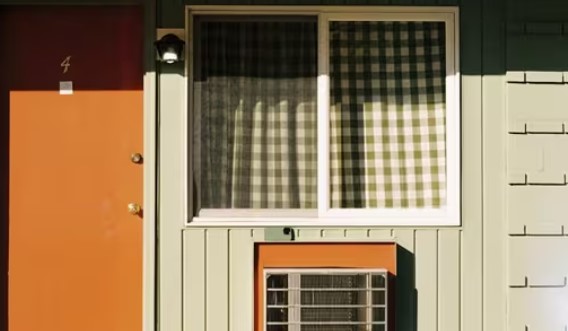
The case has sparked a wider debate online about tenants contributing to home improvements and facing steep rent hikes at the time of lease renewal
A Mumbai tenant has sought advice on Reddit after his landlord proposed increasing the monthly rent from ₹48,000 to ₹55,000, declined to assure a lease renewal and asked him to vacate the apartment despite his willingness to continue as a tenant. The dispute has also raised questions over a ₹10,000 contribution the tenant made towards installing an air conditioner in the rented flat and whether he has any claim over the amount or the appliance.
“Can the landlord increase rent from ₹48k to ₹55k at renewal? Can they refuse renewal and ask me to move out even if I’m willing to continue? Since we contributed ₹10k towards the AC, do I have any claim there? If I don’t have my agreement copy right now, what’s the best way to protect my deposit,” he asks.
The tenant said he had been living in a 1BHK apartment with a flat mate for around 10 months, paying a monthly rent of ₹48,000. According to him, the flat was completely unfurnished and did not even have an air conditioner when they moved in.
A few months before the lease was due to end, the tenant's father reportedly contributed ₹10,000 towards the installation of an air conditioner, while the landlord paid the remaining amount. At the time, the tenant said he was happy with the arrangement and expected to continue living in the apartment after the lease period.
However, circumstances changed when his flat mate got married and decided to move out. Around the same time, the landlord informed him that the rent for the next term would be increased from ₹48,000 to ₹55,000 per month.
The tenant said he was willing to renew the lease if the increase was kept to around 7–10 per cent and if assistance was provided in finding a replacement flat mate. Instead, he began receiving mixed explanations about the future of the apartment, including suggestions that the landlord's relatives might move into the property.
As uncertainty grew, the tenant started exploring alternative accommodation. He claimed that shortly after informing the landlord of his plans, prospective tenants were brought in to view the apartment for the next lease term.
What has left him particularly frustrated is the air-conditioner contribution. He said no one had indicated that the tenancy might end soon when he agreed to share the installation cost. He also later realised that he may have misunderstood the lease expiry date and currently does not have a copy of the registered agreement to verify the exact terms.
Now preparing to move out, the tenant is seeking legal clarity on four key questions: Can a landlord increase the rent from ₹48,000 to ₹55,000 at renewal? Can the landlord refuse to renew the lease even if the tenant wishes to continue? Does contributing ₹10,000 towards the air conditioner give the tenant any ownership rights or entitlement to compensation? And how can he safeguard his security deposit if he does not currently possess a copy of the rental agreement?
The case has sparked a wider discussion online about tenants contributing to fixtures and improvements in rented homes, rent hikes at the time of renewal, and the importance of retaining copies of registered leave-and-license agreements.
Tenant-landlord clash: What legal experts have to say?
Legal experts say the relationship between a landlord and a tenant is fundamentally contractual. The rights and obligations of both parties are largely determined by the terms of the lease or leave-and-license agreement. If the agreement provides for a rent escalation upon renewal, then that clause will govern the arrangement. Whether a 12% increase is fair or not is secondary; what matters legally is whether both parties agreed to it and recorded it in the contract.
Similarly, a landlord's decision not to renew a tenancy does not, in itself, make the action illegal, they say.
“Most agreements contain provisions regarding notice periods and termination. For instance, if a landlord wishes to occupy the property personally, they may serve the notice required under the agreement and ask the tenant to vacate. These situations are generally governed by the contract rather than by broader notions of fairness,” said Arpita Mukherjee, a corporate legal practitioner.
Where there is no written agreement, matters become more complicated. However, if a person has been paying rent and the landlord has been consistently accepting it, the law may recognise a ‘deemed tenancy.’ Such conduct establishes a landlord-tenant relationship even in the absence of formal documentation. The terms of such a tenancy may be inferred from the parties' conduct, but they may also be more difficult to enforce and may be terminable in accordance with applicable legal requirements, she explains.
In most standard lease agreements, there are also clauses dealing with fixtures, fittings, maintenance responsibilities, and the treatment of normal wear and tear. These provisions help prevent disputes when the tenancy ends. In cases where no written agreement exists, the parties often rely on mutual understanding and good faith, she said.
“Taking such disputes directly to social media may not always be the best course of action, as public allegations can sometimes aggravate an already sensitive situation and make resolution more difficult. A conciliatory approach is generally advisable, particularly where the parties have had an informal arrangement. Open communication and negotiation may help both sides reach a practical solution while addressing the tenant's concerns, who may be experiencing genuine distress,” she adds.


comments


Other categories
Recent Comments