


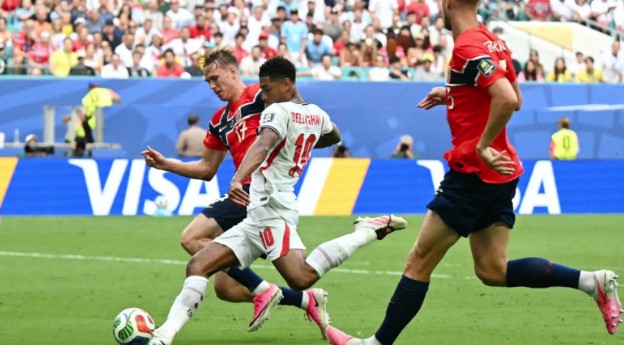
Jude Bellingham scored a stunning brace as England ended Norway's dream World Cup run with a narrow win after extra time.
England's narrow 2-1 win over Norway in the FIFA World Cup 2026 was marred by a 'spider-cam' controversy surrounding Jude Bellingham's first-half equaliser in Miami. Bellingham scored a stunning brace as England ended Norway's dream World Cup run with a narrow win after extra time. However, Norway was left furious after Bellingham's equaliser in first-half stoppage time, as the players were seen complaining that Orjan Nyland's goal kick had hit the cable of the overhead camera in the build-up.
However, neither the referee nor the VAR team interfered in the matter, leaving Norway absolutely furious-especially after Torbjorn Heggem's goal in the second half was disallowed due to a foul in the build-up.
Former Premier League referee Graham Scott shared his views on the spider-cam controversy, saying that while the ball might have hit the cable of the camera, the referee and the VAR can only intervene if there is enough evidence to overturn the decision.
"The Skycam attached to cables that hovers above the pitch may have played an unwitting part in Jude Bellingham's goal just before half-time. The on-field team would only spot such contact if the ball's trajectory was affected dramatically. The VAR could intervene if there was evidence one of the teams suffered an obvious disadvantage, but that has to be clear and obvious," Scott told The Athletic.
"Strictly speaking, you can make a case for outside interference, which means there should be a dropped ball. But in practice there has to be some evidence of impact. You would allow play to continue if the ball hit a paper cup or small piece of debris on the pitch if it made no difference to the play. It's hard to be sure here, but in any event it's unlikely the VAR would even consider checking a camera angle up in the gods when reviewing the attacking phase," he added.
Scott further explained that given the intense scrutiny on the VAR throughout the tournament, the officials were more focused on the action on the action on the pitch - and rightly so.
"He would have been focusing on the actions of the players in the build-up, and there was no obvious reason to dig so deep, especially given the pressure on all video officials not to be too forensic, nor to delay the game in an apparent quest to find something wrong with what appeared to be a perfectly valid goal," said Scott.


comments


Other categories
Recent Comments