


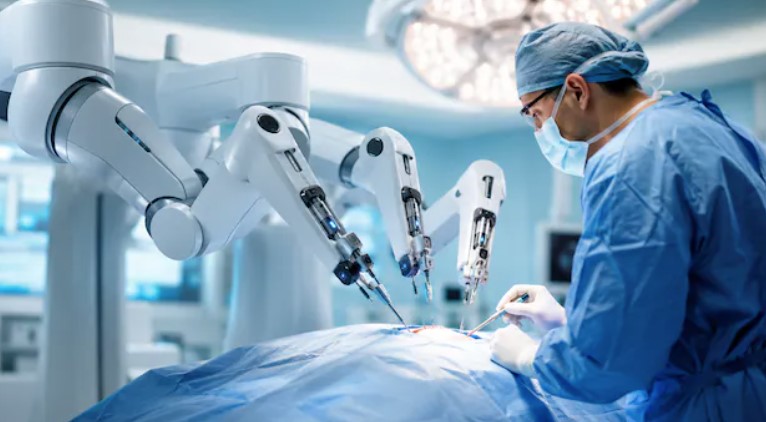
Thyroid surgery need not be a cause for fear. Modern surgical techniques have made treatment increasingly precise and patient-friendly.
For many patients diagnosed with a thyroid condition, the thought of surgery can immediately bring concerns about pain, recovery and, most importantly, a visible scar on the neck. While conventional thyroid surgery remains an established treatment, advances in robotic surgery are changing the way selected patients approach thyroid procedures. Robotic thyroid surgery is a minimally invasive technique in which the surgeon uses robotic instruments to remove part or all of the thyroid gland. Unlike conventional surgery, the incision can be placed away from the neck, commonly through an approach involving the armpit or chest, thereby avoiding a visible neck scar. However, one of the biggest misconceptions about robotic surgery is that the robot performs the operation independently. It does not. Every movement of the robotic system is controlled by the surgeon. The technology essentially extends the surgeon's capabilities by providing a high-definition, three-dimensional and magnified view of the surgical field, along with highly flexible, wristed instruments.
Precision beyond the cosmetic advantage
The absence of a visible neck scar is certainly an important advantage, particularly for patients who are concerned about their appearance. But robotic thyroid surgery is not simply a cosmetic procedure. The enhanced visualisation and precision offered by the robotic system can help surgeons perform meticulous dissection around delicate structures such as the recurrent laryngeal nerve and the parathyroid glands. The technology also incorporates tremor filtration, allowing controlled movements during surgery. For appropriately selected patients, these features can help minimise tissue trauma and contribute to a more comfortable postoperative recovery.
Is robotic surgery suitable for everyone?
Not every thyroid patient is a candidate for robotic surgery. Patients with thyroid nodules, selected early thyroid cancers and certain benign thyroid enlargements may be considered after detailed evaluation. The size and location of the thyroid disease, its extent and the patient's overall health are important factors in determining whether robotic surgery is appropriate. Patients with very large goitres, advanced thyroid cancers involving surrounding structures or certain complex medical conditions may be better suited to conventional open surgery. Therefore, patient selection remains one of the most important aspects of robotic thyroid surgery.
What about voice changes?
One of the major concerns following thyroid surgery is voice alteration because the nerve responsible for controlling the voice lies close to the thyroid gland. The magnified three-dimensional view and precision of robotic instruments can help the surgeon identify and preserve this delicate nerve during surgery.
While no surgery can completely eliminate the possibility of complications, meticulous surgical technique and careful preservation of vital structures remain central to achieving good outcomes.
Is recovery faster?
Recovery varies from patient to patient, but many patients are able to walk within a few hours after surgery and may be discharged within one or two days. In our experience, most patients require pain medication for around 48-72 hours. The absence of a neck incision can also make swallowing and neck movements more comfortable during recovery. These benefits can be particularly valuable for elderly patients, for whom prolonged use of pain medication may be undesirable. Importantly, robotic thyroid surgery should not be viewed as a procedure exclusively meant for younger patients seeking a scarless neck. Age alone does not determine suitability. The nature of the thyroid disease, the patient's health and careful surgical evaluation are far more important considerations.
Choosing the right surgery, not simply the newest surgery
The growing popularity of robotic thyroid surgery should not mean that every patient should automatically choose a robotic approach. The best surgical technique is the one that is appropriate for the individual patient's disease. Patients diagnosed with a thyroid condition requiring surgery should discuss all available options with an experienced thyroid surgeon. Understanding the nature of the disease, the benefits and limitations of each approach, the surgeon's experience and the expected recovery can help patients make an informed decision.
Thyroid surgery need not be a cause for fear. Modern surgical techniques have made treatment increasingly precise and patient-friendly. For appropriately selected patients, robotic thyroid surgery can offer the combination of surgical precision, reduced tissue trauma, comfortable recovery and the significant cosmetic advantage of avoiding a visible neck scar.
(By Dr. S. K. Bala, Surgical Oncologist and Robotic Surgeon, CK Birla Hospitals, CMRI)


comments


Other categories
Recent Comments